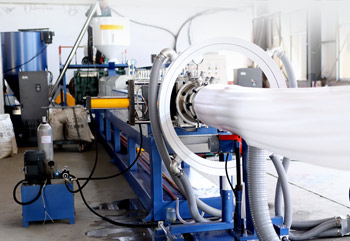
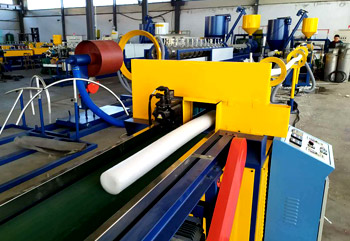
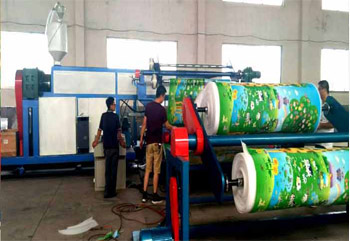
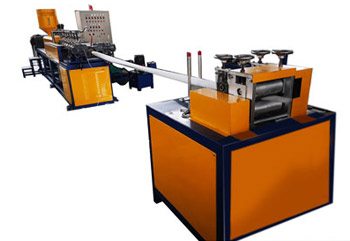
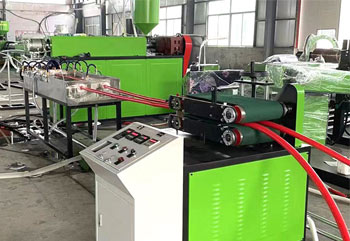
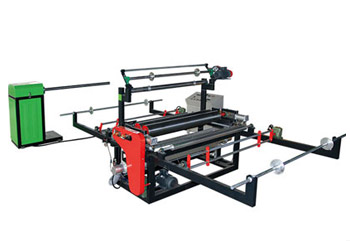
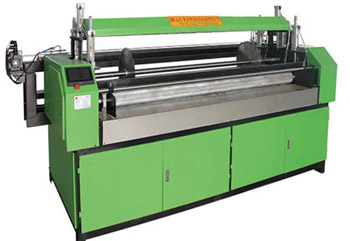
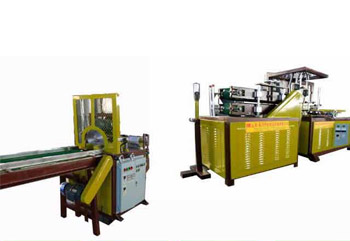
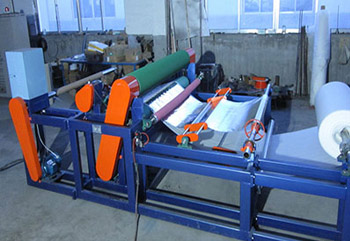
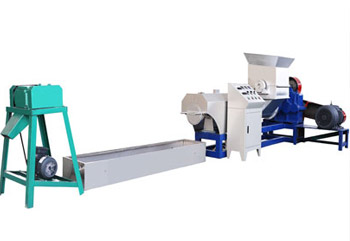
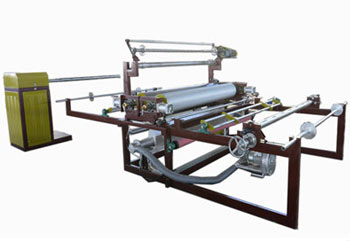
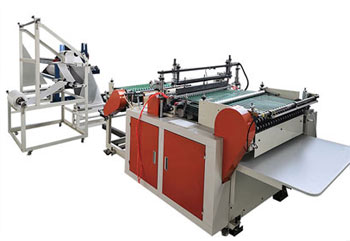
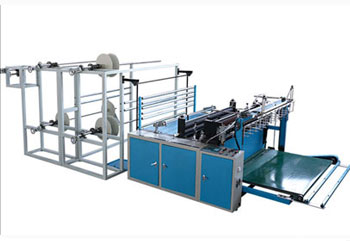
EPE crawling pad adopts the innocuous and unpoisonous EPE(PE foam film) as the intermediate material. The front side is laminated by CPP or PE color film, which is using inner printing technology, the users will not touch the hazardous substance directly.The back side is laminated with PET composite aluminum film, which has the good features of temperature insulation and dampproof.Our company brought in foreign advanced technology, take the lead in developing the EPE crawling pad making machine.
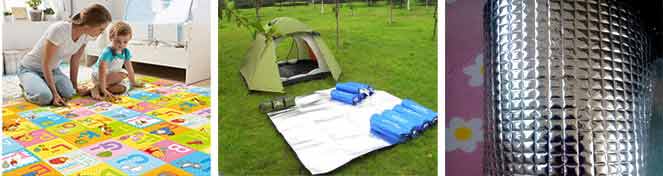
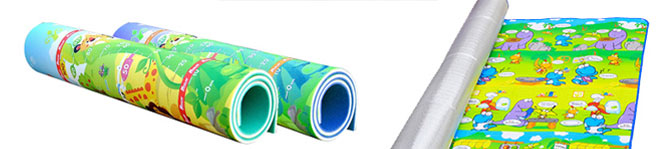
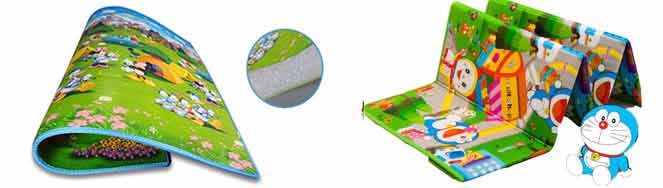
PE Extrusion laminating machine applicable to laminating EPE foam sheet with PE film, OPP color film, Aluminum film, PVC, knitted cotton, LDPE or PP composite materials, aluminum foil, web paper, cloth and other substrates. It is suitable for the production of food packaging, medical packaging, baby crawling mats, moisture-proof mats, and greenhouses heat preservation quilt. The surface of the produced product is uniform, clear, strong concave and convex feeling, no bubble, high yield, and highly praised by customers at home and abroad.
PE Extrusion laminating machine adopts full computer automatic controlling system, this can synchronization regulate the coating film extrusion capacity, embossing roller rotary speed and other relative specifications.The finish product surface has the features of uniform, clear, high concavo-convex, free of bubbles and high yield.
The main technical parameters of PE Extrusion laminating machine:
| Model | Screw(MM) | MouldWidth(MM) | ProductWidth(MM) | Speed(M/Min) | Power(KW) | Size(M) |
| 1600 | 75 | 1600 | 1450mm | 30~110 | 50 | 10x8x3.5 |
| 1800 | 75 | 1800 | 1650mm | 30~110 | 80 | 10x8x3.5 |
| 2200 | 90/110 | 2200 | 2050mm | 30~110 | 110/120 | 11.5x9x3.5 |
| 3200 | 110/120 | 3200 | 3050mm | 30~110 | 150 | 12x10x3.5 |
Extrusion coating vs extrusion lamination — what to specify
Buyers often mix the two terms. Use this to scope the inquiry correctly:
Extrusion coating — molten polymer is applied to one substrate only, e.g. LDPE on kraft or board for cups, trays, milk/juice carton stock. Output is a coated single web.
Extrusion lamination — molten polymer is placed between two webs and nips them into a composite, e.g. PET/PE/foil, BOPP/PE/paper, woven/PE/PP film. Output is a multi-layer structure with combined strength, barrier and heat-seal properties.
Co-extrusion lamination — two extruders or a feedblock place two polymer layers in one pass for improved adhesion, heat resistance or recycled-content structures.
If the customer mainly wants a moisture/heat-seal layer on paper, specify coating. If they want snack pouches, lidstock, cable wrap or insulated building membranes, specify lamination/sandwich structures.
Typical applications
Flexible food packaging: snack, noodle, sauce and retort-ready laminates (structure dependent)
Liquid packaging board: PE-coated/laminated paper for milk, juice and dairy cartons
Industrial laminates: woven PP + PE film for fertilizer/salt/animal-feed sacks
Nonwoven lamination: hygiene backsheet, medical drape, filter media, roofing carrier
Foam lamination: EPE/PE foam + film/foil/nonwoven for baby mats, insulation, protective rolls
Technical barrier rolls: paper/foil/PE or PET/alu/PE for moisture-, light- and odor-sensitive goods
How to choose the model
Ask the buyer for five inputs before quoting:
Substrate combination — primary web, secondary web, optional third web; grammage or micron, max roll diameter.
Polymer and layer duty — LDPE seal layer, PP for temperature resistance, EVA for adhesion/low temp, EAA/tie for foil or metallized bonding.
Coating/glue weight — gsm per side; this determines screw diameter, MFI, die land and cooling capacity.
Line speed and daily volume — convert to kg/h of polymer and m²/day of finished web; select extruder and nip/chill length accordingly.
End-use compliance — food contact, heat-seal temperature, barrier targets, post-consumer recycled content, primer or corona requirement.
Example scoping: BOPP 12 µ + LDPE tie 15–20 µ + PET 12 µ at 250 m/min and 1600 mm width needs a larger screw and shorter coating weight than kraft 120 gsm + LDPE 25–30 µ at 120 m/min. Do not quote speed alone; quote coating weight and bond specification.
FAQ
What substrates can an extrusion laminating machine bond?
It bonds film-to-film, film-to-foil, film-to-paper, nonwoven-to-film and woven-to-film structures using a molten polymer tie layer. Common webs include BOPP, BOPET, BOPA, CPP, LDPE/HDPE film, aluminum foil, metallized film, kraft/board 50–500 gsm, nonwoven and PP/HDPE woven. The correct resin and primer depend on surface energy and end-use barrier.
Which resin should I use for food packaging lamination?
LDPE is standard for heat seal and moisture barrier; EVA improves low-temperature adhesion and nip wetting; PP is used when higher temperature resistance is required; EAA or dedicated tie resins improve bonding to aluminum foil and metallized surfaces. Food-contact approval depends on resin grade, primers, additives and local regulation, not on the machine alone.
What coating thickness and tolerance can the line hold?
Single coating layers are commonly specified from about 8 µm upward; thin tie layers for lamination often run 8–30 µm, while heavy paper coating can exceed 50–100 µm. With automatic die-bolt control and a scanning gauge, cross-machine uniformity can be held around ±5% or better, subject to resin, speed and substrate stability.
What is the difference between extrusion lamination and adhesive lamination?
Extrusion lamination uses molten polymer as the bonding layer and cools it on chill rolls; it avoids the solvent/adhesive curing step for that layer. Adhesive lamination uses solvent, water-based or solventless glue and requires drying/curing. Extrusion is often preferred for high-speed PE/paper/foil structures; adhesive lamination remains useful for very thin films, sensitive substrates or specialist barrier chemistries.
How many operators are needed?
A manual line may need 2–3 per shift for splicing, threading, quality checks and winding. With turret unwind/rewind, automatic splicing, recipe control and inline gauging, one operator plus periodic QC can manage routine runs, depending on plant workflow.
Can the machine run recycled-content or bio-based resins?
It can run compliant recycled PE and certain bio-based polymers, but screw geometry, die temperature, filtration and chilling must be matched to melt stability. For PCR content, specify expected percentage, odor/volatile limits and gel tolerance during quotation.
What factory utilities are required?
Normally 3-phase power sized to extruder and drives, chilled-water or central cooling for chill rolls, compressed air for pneumatics, exhaust where primer/solvent primer is used, and adequate linear space for unwind, extruder, nip, cooling, treating and rewind. A 1600–2000 mm line typically needs a long, straight bay; final layout is issued after substrate/speed confirmation.
What after-sales support do you provide for export installations?
Factory acceptance test with customer resin where possible, export packing, installation supervision, commissioning, operator and maintenance training, electrical/mechanical manuals in English, spare-part list, and remote troubleshooting. On-site service terms, lead time and warranty are quoted per contract.